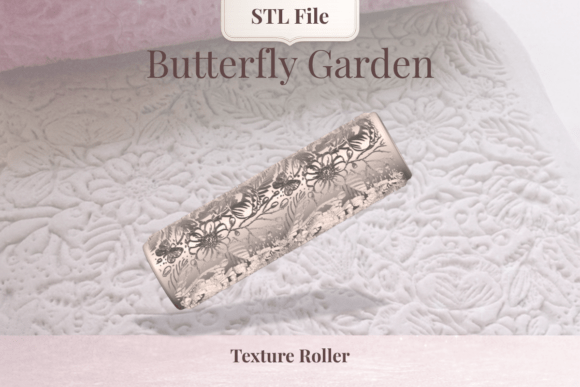
Texture Roller STL – Butterfly Garden: A Creative Tool for Polymer Clay Artists
For polymer clay artists and jewelry makers looking to elevate their designs, the Texture Roller STL – Butterfly Garden offers a unique and practical way to add intricate surface detail. This 3D-printable roller is specifically designed to create consistent, repeatable patterns in clay, making it a go-to tool for crafters who want professional-looking results without the hassle of hand-carving each texture.
Designed for Detail and Consistency
The Texture Roller STL – Butterfly Garden measures 70 mm in height and approximately 20 mm in diameter, making it a compact yet effective tool for rolling patterns into polymer clay. The butterfly motif is not only visually appealing but also versatile, lending itself well to both delicate and bold jewelry pieces. Whether you're creating earrings, pendants, or decorative elements for mixed-media art, this texture roller helps maintain uniformity across multiple items, which is especially valuable when producing small batches or matching sets.
Real-World Use Cases Across Creative Industries
Jewelry Makers are among the biggest beneficiaries of this tool. The butterfly pattern works beautifully on clay earrings, resin-coated pendants, and textured rings. It gives handmade jewelry a boutique-level finish that stands out in markets or online shops. Because the pattern is symmetrical and evenly spaced, it’s easy to apply without needing advanced skills, making it accessible for beginners and reliable for professionals.
Artists and Mixed-Media Crafters can use the roller to add depth and interest to clay canvases, boxes, or even sculptural elements. The texture can be pressed into soft clay before baking, then painted or glazed afterward for a more dimensional effect. Some artists have even used it to create textured backgrounds for resin art by impressing the pattern into molds before pouring.
Educators and Workshop Leaders may find this tool useful when teaching polymer clay techniques. The ease of use allows students to focus on color blending, shaping, and finishing rather than getting bogged down with texture creation. Plus, the butterfly design is universally appealing, making it a great choice for classes aimed at children or hobbyists.
How It Works with Different 3D Printers
This roller is optimized for resin 3D printing, which allows for the finest level of detail reproduction. When printed using a resin printer with standard high-detail settings, the texture comes out crisp and clean—perfect for transferring the intricate butterfly pattern onto clay surfaces.
It’s also possible to print the roller using an FDM printer, but there are a few considerations. Due to the curved surface and fine pattern details, using a brim during printing is highly recommended to improve bed adhesion and reduce warping. While FDM printing may not capture the same level of detail as resin, it can still produce a functional roller that works well for less intricate applications.
Who Should Use the Texture Roller STL – Butterfly Garden?
Beginners will appreciate how this tool simplifies the process of adding texture. Instead of experimenting with carving tools or stamps, they can roll on a professional-looking design in seconds. It’s a confidence booster that helps them produce polished results early in their crafting journey.
Experienced Artists can integrate the roller into more complex workflows. For example, they might layer textures by using multiple rollers or combine the butterfly pattern with inks, paints, or metallic foils to create one-of-a-kind effects. Some have even used it to texture clay veneers for caning, where consistency is key.
Small Business Owners and Etsy Sellers benefit from the efficiency this tool brings to production. When making multiple copies of a design, having a consistent texture is essential for maintaining a cohesive brand look. The roller allows for quick, repeatable results that help scale production without sacrificing quality.
Considerations Before Printing and Using
Before printing your Texture Roller STL – Butterfly Garden, consider the type of printer you're using and the quality of finish you expect. Resin printers will give you the best results for fine details, but if you're working with an FDM printer, be prepared to do some post-processing to smooth out any layer lines that might interfere with the texture transfer.
Also, think about the type of clay you're using. Softer clays like Premo or Fimo Soft accept textures more easily than firmer varieties. If you're working with a stiff clay, condition it well and consider using a bit of cornstarch or powder to prevent sticking while rolling.
Finally, keep in mind that while the roller is designed for polymer clay, some users have experimented with air-dry clay and resin molds. Results may vary depending on the material’s texture receptivity and curing process.
Strengths and Limitations
One of the biggest strengths of the Texture Roller STL – Butterfly Garden is its ability to deliver consistent, professional textures with minimal effort. It’s a time-saver that adds visual interest without requiring artistic drawing skills. Additionally, because it's a digital download, it’s immediately accessible—you can print it at home without waiting for shipping or dealing with inventory.
However, it does come with a few limitations. As a 3D-printed tool, its effectiveness depends on the quality of the print. If the pattern doesn’t transfer cleanly, it may require adjustments to the printer settings or post-processing. Also, the size is fixed, so if you need a larger or smaller roller, you'll need to scale the file yourself, which could affect the spacing of the pattern.
Final Thoughts
The Texture Roller STL – Butterfly Garden is more than just a 3D model—it’s a creative solution for anyone looking to add elegant, repeatable texture to their polymer clay projects. Whether you're a hobbyist, a small business owner, or a teacher, this tool can streamline your workflow and elevate your finished pieces. With the right printer and a bit of experimentation, it opens up a world of design possibilities without requiring advanced technical skills.